Try these easy-to-bake cinnamon spiced pumpkin muffins as a snack. They’re perfect for Halloween!
Serves 12
Easy
Prep:
Cook:
Ingredients
225g all purpose flour
2 tsp baking powder
1 tbsp ground cinnamon
100g sugar
50g light brown sugar
200g pumpkin purée (about 1/2 standard 15 oz. can)
2 large eggs
125g salted butter, melted
Equipment needed:
12-hole muffin or cupcake pan
paper muffin/cupcake cups
2 bowls, one large, one medium
whisk
wire rack for cooling muffins
Method
Step 1: Preheat oven to 350. Place paper muffin cups in muffin pan. Mix the flour, baking powder, cinnamon, and both sugars together in a large bowl. Break up any lumps of brown sugar by rubbing them between your fingers.
Step 2: Whisk the pumpkin puree and eggs together in the smaller bowl, then add to the dry ingredients with the melted butter. Whisk for 2 minutes or so until just combined.
Step 3: Bake for about 15 minutes, until golden and puffed and a toothpick inserted comes out clean.
Cool completely on a wire rack. Will keep for three days in an airtight container.
violently – adv., to do something with force and anger
flourished – v., to thrive, to grow well
harmony – n., getting along, working together
tribes – n., groups of people who share a culture
throughout – prep., all over, everywhere
colonize – v., to take control of a new place
concern – n., caring, wanting someone to feel safe or feel better
dominance – n. control, authority
Indigenous – adj., being the people who originally lived in a region
proclaim – v., to announce for the public to know
resilience – n, able to recover quickly from difficulty
determination to preserve – expression, to have a firm goal to protect something
campaign – n., a series of planned actions to reach a goal
displacement – n, forced out of a home territory
assimilation – n., when minority groups absorb the characteristics of the dominant culture
What, exactly, is this day? It is a day to remember and honor the Native Americans, the people who lived here long before white settlers invaded and violently took their land.
Over 400 years ago, a peaceful society flourished in the Americas. The Native Americans lived with each other and in harmony with nature. They worshiped the earth and the sky, and took good care of their children and their elders. There were many different tribes of Native Americans throughout what is now the United States.
Europeans arrived after Columbus’ discovery of North America and soon colonized the new country. They did this without respect or concern for the people who were here before them. Terrible fights between the white people and the Native Americans led to white dominance over the lands that had belonged to the tribes.
President Biden, in 2021, became the first U.S. president to recognize Indigenous Peoples’ Day officially.
He proclaimed the second Monday in October as a day to honor Native Americans, their “resilience and strength” and determination to preserve “land, language, spirit, knowledge, and tradition,” even as they have faced a “centuries-long campaign of violence, displacement, assimilation, and terror,” he said.
Basketball 🏀 began in 1891 when Canadian teacher Dr. James Naismith was asked to create an indoor game for his students during the cold Massachusetts winter. Using two peach baskets, a soccer ball, and 13 simple rules, he created a sport that would eventually become one of the most popular games in the world.
Dr. James Naismith
The NBA was created in 1949 when the Basketball Association of America (BAA) merged with the National Basketball League (NBL). In 1976, the league expanded after merging with the American Basketball Association (ABA).
Today, the NBA season runs from October to April, with 82 games per team, followed by the playoffs and NBA Finals in June. This year’s season starts on Oct. 20th with the following games:
Boston Celtics vs. Detroit Pistons
Philadelphia 76ers vs. New York Knicks
Oklahoma City Thunder vs. San Antonio Spurs
2026 NBA Champions – The New York Knicks
Today, the NBA has 30 teams divided between the Eastern and Western Conferences. While players once had very specific positions, today’s stars are expected to do a little bit of everything- shoot, pass, defend, and score from almost anywhere on the court.
The goal of the game is simple: score more points than your opponent over four 12-minute quarters. Three-point shots, slam dunks, and buzzer-beaters have made basketball one of the most exciting sports to watch. From its humble beginnings with peach baskets to sold-out arenas around the world, the NBA continues to grow and inspire millions of fans every year.
Basic Rules:
The Objective:
Put the ball through the opponent’s hoop.
The team with the most points after four 12-minute quarters wins.
Scoring
3 Points: any shot made from outside the arc (three-point line).
2 Points: any standard field goal made inside the arc.
1 Point: free throws awarded after a foul.
The Shot Clock:
Teams have exactly 24 seconds to attempt a shot that hits the rim, or they forfeit possession.
Movement Violations:
Traveling: Walking or running with the ball without dribbling.
Double Dribble: Stopping your dribble and starting again, or dribbling with both hands simultaneously.
Personal Fouls: Players are allowed 6 personal fouls before they are “fouled out” and disqualified from the remainder of the game.
The NBA is divided into two conferences – the Eastern Conference & the Western Conference. Each conference is then divided into three divisions:
Eastern Conference
Atlantic Division: Boston Celtics, Brooklyn Nets, New York Knicks, Philadelphia 76ers, Toronto Raptors.
Central Division: Chicago Bulls, Cleveland Cavaliers, Detroit Pistons, Indiana Pacers, Milwaukee Bucks.
Southeast Division: Atlanta Hawks, Charlotte Hornets, Miami Heat, Orlando Magic, Washington Wizards.
Pacific Division: Golden State Warriors, Los Angeles Clippers, Los Angeles Lakers, Phoenix Suns, Sacramento Kings.
Southwest Division: Dallas Mavericks, Houston Rockets, Memphis Grizzlies, New Orleans Pelicans, San Antonio Spurs.
Basketball Positions
Each team consists of five players: the point guard, shooting guard, small forward, power forward, and center.
Point Guard (PG) – #1 The team’s main ball-handler and playmaker. Today, many point guards are also top scorers and shooters, like Stephen Curry.
Shooting Guard (SG) – #2 A perimeter scorer and shooter. Modern shooting guards often focus on three-point shooting and defense.
Small Forward (SF) – #3 A versatile scorer and defender. Many modern small forwards also create plays and handle the ball, like LeBron James.
Power Forward (PF) – #4 Traditionally a strong rebounder near the basket. Today, many power forwards can also shoot three-pointers as “stretch fours.”
Center (C) – #5 A team’s tallest player, known for rebounding and protecting the rim. Modern centers like Nikola Jokić can also shoot and pass like guards.
Due to the strengthening Nor’easter in the forecast on Saturday, 9/26/2026, tomorrow’s classes will be cancelled and the school will be closed. If you have any questions or need assistance from the Weekend Administrative Team, please contact us at 212-533-6306.
At this time, no decision has been made about Sunday classes. Please stay tuned for program announcements and check your email, text messages, or other school communications for updates.
Stay Safe and Stay Informed
Here are some tips to help you prepare for the storm:
Stay indoors as much as possible during heavy rain and strong winds.
Charge your phone and other important devices before the storm arrives.
Avoid flooded streets, sidewalks, and subway stations.
If you must travel, allow extra time and check for transit delays.
Follow local weather reports and emergency alerts for the latest information.
Sign up for Notify NYC, the City’s free emergency alert system, by texting NOTIFYNYC to 692-692 or visiting nyc.gov/notifynyc. Basement apartment residents can sign up to receive automated flooding alerts through Notify NYC. For preparedness information, visit nyc.gov/beready.
Thank you for your understanding. Please stay safe, take care of your family, and monitor your email and phone for updates about Sunday classes.
There are many professional sports in the United States, but none is more popular than the NFL. With the start of the new season just around the corner on Wednesday, September 9th, let’s learn a little about the game that millions of people love.
The person most often called the “Father of American Football” is Walter Camp, a Yale player who helped shape the game. American football developed from a combination of soccer and rugby, and Camp introduced several important rule changes in the 1880s. These included the line of scrimmage (where the ball is snapped), the system of downs (the team’s attempts to move the ball), and teams of 11 players.
Walter Camp, the “Father of American Football “
In 1920, the American Professional Football Association was founded in Canton, Ohio. Two years later, it changed its name to the National Football League (NFL), the league we know today.
Today, the NFL has 32 teams. They are divided into two conferences: the American Football Conference (AFC) and the National Football Conference (NFC). Each conference is divided into four divisions – East, North, South, and West – with four teams in each division.
Key Vocabulary:
Offense – The team with the ball.
Defense – The team trying to stop the offense.
Receiver (WR) – A player who catches passes.
Running Back (RB) – A player who primarily runs with the ball.
Huddle – When players gather to discuss the next play.
Audible – A last-second change to the play called by the quarterback.
Blitz – When extra defenders rush the quarterback.
Playoff – Postseason tournament to determine the champion.
The AFC
The AFC East: Buffalo Bills, Miami Dolphins, New England Patriots, and New York Jets.
The AFC North: the Baltimore Ravens, Cincinnati Bengals, Cleveland Browns, and Pittsburgh Steelers.
The AFC South: the Houston Texans, Indianapolis Colts, Jacksonville Jaguars, and Tennessee Titans
The AFC West: the Denver Broncos, Kansas City Chiefs, Las Vegas Raiders, and Los Angeles Chargers.
The NFC
The NFC East: the Dallas Cowboys, New York Giants, Philadelphia Eagles, and Washington Commanders.
The NFC North: the Chicago Bears, Detroit Lions, Green Bay Packers, and Minnesota Vikings.
The NFC South: the Atlanta Falcons, Carolina Panthers, New Orleans Saints, and Tampa Bay Buccaneers.
The NFC West: the Arizona Cardinals, Los Angeles Rams, San Francisco 49ers, and Seattle Seahawks.
During the regular season, teams compete within their divisions and conferences for playoff spots, and the champions of the AFC and NFC face each other in the Super Bowl to determine the NFL champion.
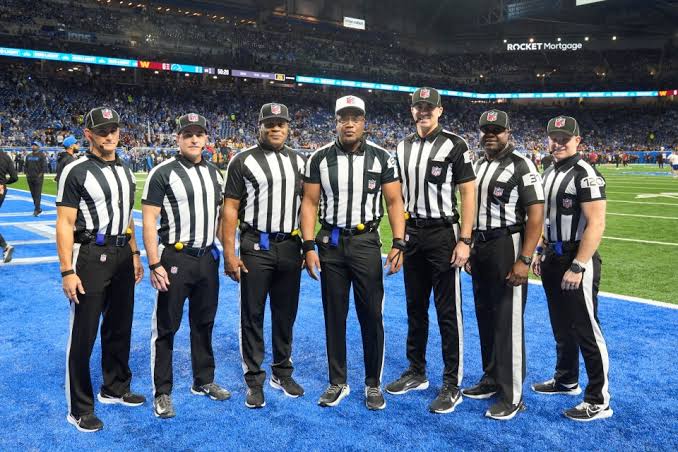
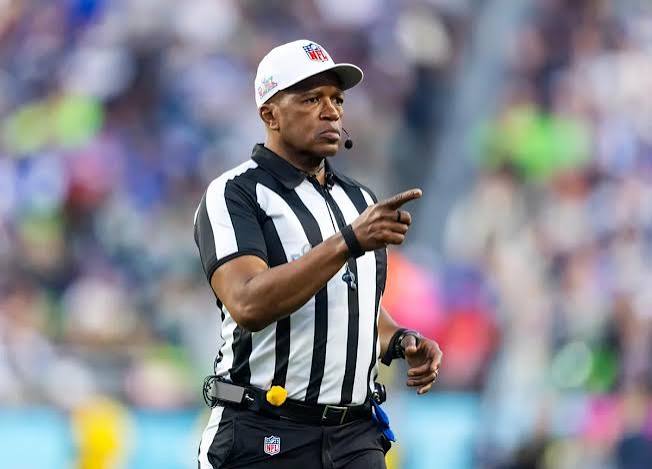
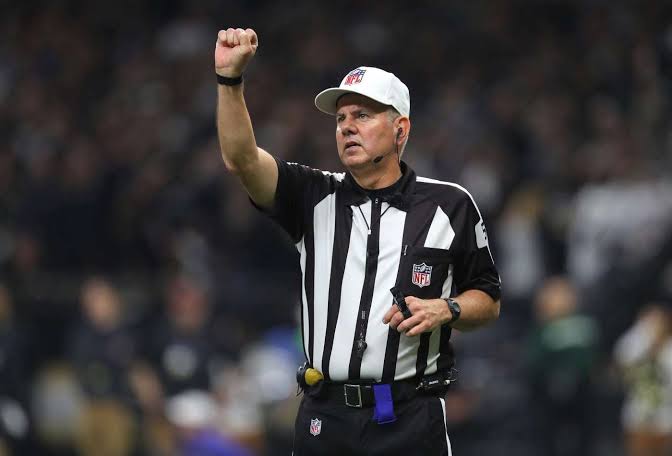
Photos from Past Super Bowls
The Basic Rules:
Each team has an offense and a defense, with 11 players on each side. The offense tries to move the ball down a 100-yard field and into the opponent’s end zone, while the defense tries to stop them.
Downs: The offense gets four chances (called downs) to move the ball 10 yards. If they gain 10 yards or more, they earn a first down and receive a new set of four downs. If they fail to do this, possession is turned over to the other team, and the offense and defense switch roles.
The Clock: A game lasts 60 minutes, divided into four 15-minute quarters. However, because the clock stops frequently, a televised game usually takes about three hours to complete.
How Scoring Works
Touchdown (6 points): Running or catching the ball in the opponent’s end zone.
Extra Point / Two-Point Conversion (1 or 2 points): Attempted immediately after a touchdown. Kicking the ball through the uprights earns 1 point; running or passing it into the end zone earns 2 points.
Field Goal (3 points): Kicking the ball through the uprights, usually on fourth down, when the offense is close enough to score but unlikely to reach the end zone.
Safety (2 points): A rare play in which the defense tackles an offensive player holding the ball in their own end zone.
More Vocabulary:
Touchdown: Scoring 6 points by getting the ball into the opponent’s end zone.
Quarterback (QB): The player who leads the offense and usually throws the ball.
End Zone: The scoring area at each end of the field.
First Down: Earning another set of four downs by gaining 10 yards.
Down: One of the offense’s four chances to advance the ball 10 yards.
Line of Scrimmage: The spot where the ball is placed before each play begins.
Snap: The action that starts a play when the center gives the ball to the quarterback.
Pass: Throwing the ball to a teammate.
Run: Carrying the ball instead of throwing it.
Tackle: Bringing the ball carrier to the ground.
Field Goal: A kick through the uprights worth 3 points.
Interception: When the defense catches a pass intended for the offense.
Fumble: When a player loses possession of the ball before being down.
Sack: Tackling the quarterback behind the line of scrimmage.
Turnover: When possession changes because of an interception, fumble, or failed fourth down.
Punt: A kick to the other team, usually on fourth down.
Red Zone: The area inside the opponent’s 20-yard line where scoring is likely.
Penalty: A rule violation that results in a loss or gain of yards.
Overtime: Extra playing time if the score is tied after regulation.
Super Bowl: The NFL championship game played each February.
The 10 greatest players of all time
10. EMMITT SMITH, RUNNING BACK(RB) (1990-2004), 9. JOE MONTANA, QUARTERBACK(QB) (1979-1994), 8. PATRICK MAHOMES, QUARTERBACK (QB) (2017-PRESENT), 7. REGGIE WHITE, DEFENSIVE END(DE) (1985-1998, 2000), 6. WALTER PAYTON, RUNNING BACK(RB) (1975-1987), 5. PEYTON MANNING, QUARTERBACK(QB) (1998-2015), 4. LAWRENCE TAYLOR, LINEBACKER(LB) (1981-1993), 3. JIM BROWN, RUNNING BACK(RB) (1957-1965), 2. JERRY RICE, WIDE RECEIVER(WR) (1985-04), 1. TOM BRADY, QUARTERBACK(QB) (2000-2022)
Simple ways to study, remember new words, and feel ready for the school year.
The beginning of the school year is a fresh start. New classmates, new books, and new routines mean that school can feel exciting and hard at the same time.
The good news is this: you do not need to study for many hours all at once. It is better to use small, strong habits every day. Testing yourself, reviewing over time, and taking breaks can help you remember more than only rereading or highlighting. These habits can help you build confidence, learn vocabulary, and understand class lessons better.
1. Space Out Your Studying
Do not wait until the night before a test. Study a little bit frequently. For example, review new vocabulary on Monday, practice again on Wednesday, and quiz yourself on Friday. This helps your brain remember words and ideas for a longer time. Short study times are also less tiring.
2. Practice Active Recall
Reading your notes again can help, but it is not enough. Active recall means you close your book and try to remember. You can use flashcards, answer practice questions, or write what you remember on a blank page This is a great way to practice vocabulary, sentence patterns, and important class ideas.
3. Use the Pomodoro Technique
The Pomodoro Technique is simple. Study for 25 minutes. Then take a 5-minute break. During study time, choose one job, such as “learn 8 new words”. During the break, stand up, stretch, or drink water. This helps your brain stay fresh.
4. Teach the Material
One good way to check your understanding is to teach the lesson to someone else. You can explain it to a classmate, a family member, or even to yourself. Use simple English. If you cannot explain an idea, you will know what to study again.
5. Establish a Dedicated Study Routine
Try to study at the same time each day. A routine helps your brain know, “This is study time.” Choose a small goal before you begin. Instead of saying, “I will study English,” say, “I will practice 10 vocabulary words,” or “I will write five sentences using the past tense.” Small goals are easier to achieve.
6. Eliminate Distractions
It is hard to learn when your phone, games, or noise keep pulling your attention away. Put your phone in another room or turn on “Do Not Disturb.” Keep your study space clean. Put only the things you need on your desk: your book, notebook, pencil, and dictionary or translation tool if needed.
7. Prioritize Your Physical Health
Your body helps your brain learn. Try to sleep 7 to 9 hours each night. Sleep helps your brain save what you learned. It can also help to review new words or notes for a few minutes before bed. Eat healthy food, drink water, and move your body. A rested brain can focus better.
A Simple Plan for the First Month
Start small. Choose two habits this week, such as using flashcards and studying for 25 minutes. Next week, add one more habit. You do not have to be perfect. The goal is to practice often. Little by little, these habits will help you learn English, understand your classes, and feel ready for the school year.
Don’t forget, classes start the week of September 19th!