(Almost) just in time for Thanksgiving, here’s a website that demonstrates how pilgrims talked. Click here or on the picture below to go to the site.

(Almost) just in time for Thanksgiving, here’s a website that demonstrates how pilgrims talked. Click here or on the picture below to go to the site.

Most people believe Christopher Columbus was the first European to reach America. They’re wrong! Here’s an article from History.com which explains:
Nearly 500 years before the birth of Christopher Columbus, a band of European sailors left their homeland behind in search of a new world. Their high-prowed Viking ship sliced through the cobalt waters of the Atlantic Ocean as winds billowed the boat’s enormous single sail. After traversing unfamiliar waters, the Norsemen aboard the wooden ship spied a new land, dropped anchor and went ashore. Half a millennium before Columbus “discovered” America, those Viking feet may have been the first European ones to ever have touched North American soil.

Malcolm X was assassinated on February 21, 1965 in New York City. Here’s a story from Changing Every Day making reference to him. After you finish reading, take the quiz to test your comprehension!:
Learning to Read: Malcolm X
Lixin (Betty) Ye
Last week, I read an article about how Malcolm X improved his English by learning to read. I was inspired by it. I would like to share my reading.
Malcolm X was a black civil rights activist, religious leader, writer, and speaker. He was mysteriously assassinated at a religious rally in 1965. By that time, his book, The Autobiography of Malcolm X, was widely known.
Originally, Malcolm X was poorly educated. His English was very poor, and he did not have adequate vocabulary or communication skills. He became frustrated at his inability to read and write. It made him determined to overcome these deficiencies. When he was in prison, he started to copy a dictionary. For the A-words, he copied everything on the page of the dictionary into a notebook. After that, he read aloud his writing over and over. The next day, he realized he had written more than he had ever written before. He could even remember the meanings of most of the words. He was so fascinated that he went on to copy the other dictionary pages and to study them by reading them aloud as well. He said he never had been so truly free in his life. He really enjoyed his reading.
I understand his feeling. No matter what our condition is, we can enjoy studying and may get fulfillment from it. I admire his persistence. Maybe I cannot do the same thing as he, reading and copying a whole dictionary. However, I can learn from him to keep writing or copying English whether from the newspaper, books, magazines, or whatever I like. I can write down what I read and what I think. I can even read aloud like Malcolm. I am sure I am already enjoying studying in English.

Martin Luther King is famous for his speeches, so you may not have heard him speak in casual conversation. Here’s a video from 1967 – it’s from a talk show called the Merv Griffin Show – and in it he sits down and talks about his life and work. After you watch the video, take the quiz to test your understanding. To help you a little bit, listen for the answers to these questions:
1. Did Martin Luther King ever come to New York?
2. Where was he from?
3. What was his job? Who did he work with?
4. Was he married or single?
5. What disease did he compare racism to?
6. Did he ever write any books?
7. Was he optimistic or pessimistic about the future?
For Veterans Day, here’s a short video about one soldier in World War II. When you finish watching, take the quiz to test your comprehension:
This video comes from StoryCorps, which records real people’s real stories. To watch more videos from StoryCorps, click here.
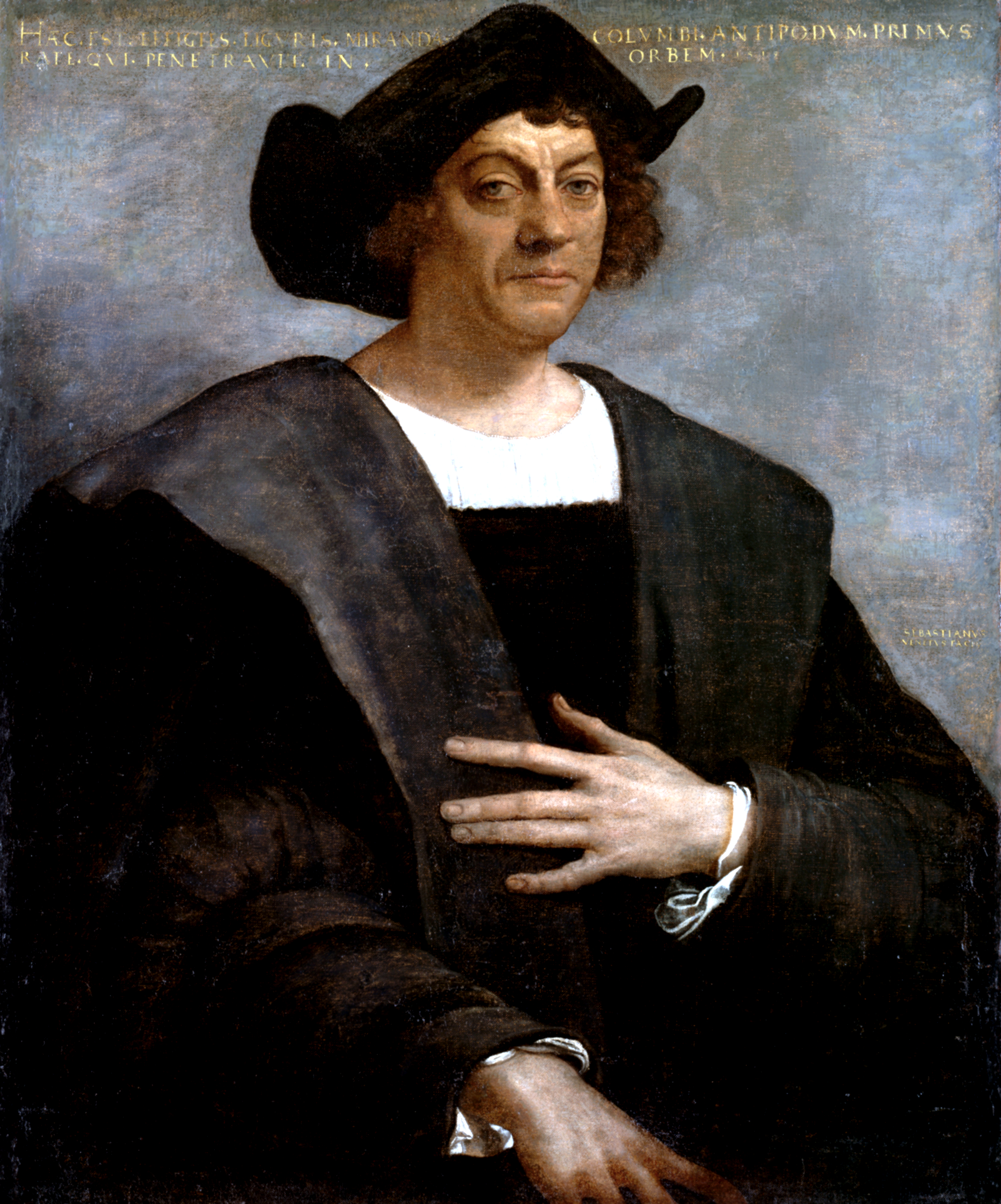
Here are a few facts about Christopher Columbus and Columbus Day:
1. Columbus’s actual name was Cristoforo Colombo.
2. He was from Italy, but he worked for Spain.
3. He “discovered” America in 1492. “Discovered” is in quotation marks because there were already people here before 1492: the Native Americans.
4. Native Americans are also known as “Indians” because Columbus believed he had reached Asia.
5. He sailed in three ships: the Nina, the Pinta, and the Santa Maria.
6. He first landed in the New World on an island he called San Salvador. Historians aren’t sure which island this now is.
7. Columbus probably wasn’t the first European to reach the American continent. Leif Ericson, a Viking, may have reached the New World over four hundred years earlier.
7. Columbus Day became an official U.S. holiday in 1937.
Now you know more than the people in this video!:
The Oscars were last night. The Oscars are movie awards. The Oscar for Best Picture (Best Movie) went to 12 Years a Slave. Watch the movie trailer above, then read about the movie below.
From Wikipedia.org:
12 Years a Slave is a 2013 historical drama film and an adaptation of the 1853 memoir of the same name by Solomon Northup, a New York State-born free African American man who was kidnapped in Washington, D.C., in 1841 and sold into slavery. He worked on plantations in the state of Louisiana for twelve years before his release.
Solomon Northup (July 1808 – 1863?)was a free-born African American from New York, the son of a freed slave. A farmer and violinist, he owned a property in Hebron. In 1841 he was kidnapped by slave-traders, having been enticed with a job offer as a violinist. When he accompanied his supposed employers to Washington, DC, they drugged him and sold him as a slave. He was shipped to New Orleans where he was sold to a plantation owner in Louisiana. He was held in the Red River region of Louisiana by several different owners for 12 years, during which time his friends and family had no knowledge of him. He made repeated attempts to escape and get messages out of the plantation. Eventually he got news to his family, who contacted friends and enlisted the Governor of New York, Washington Hunt, to his cause. He regained his freedom in January 1853 and returned to his family in New York. In his first year of freedom Northup published an account of his experiences in the memoir Twelve Years a Slave (1853).