Daytime and Evening Holiday Parties

HOLIDAY PARTIES (Jingle Bell) ROCK!

There was plenty of good cheer, food, and fun at the University Settlement’s Holiday Parties this year. The Daytime and the Evening classes contributed dazzling dishes from their home countries. The music, the festive decorations, and the games added to the fun. Both teachers and students celebrated the winter holiday season and had an excellent time together!

Setting up for our Daytime students was as much fun…
…as the party!

We played games to see who would eat first:

and then we ate!

Waiting to eat.

Abby and her students:

What’s a party without presents and reindeer?

And Joe and Christine celebrated with their students!

Our Evening classes had an equally good time!

The games were so exciting!

Time to eat!

All our friends together, celebrating:

Our Evening teachers:

And then the dancing started….

AND A GOOD TIME WAS HAD BY ALL.

Share this:

LIGHT INTO DARKNESS – WINTER HOLIDAYS

VOCABULARY PREVIEW

chilly – adj., cold
winter solstice – n., when the North Pole of the earth is farthest from the sun, the shortest day of the year
glittering – adj., sparkling, shiny
lavish – adj., fancy, elaborate
signify – v., to stand for something, to symbolize
struggles – n., difficulties
Stonehenge – n.place, a site of huge, ancient, carefully-arranged stones in England
doldrums – n., sad and bored feelings
renewal – n., newness, rebirth

The last months of the year bring winter, and winter brings cold and darkness. The days are short and the nights are long and chilly.

BUT – we are lucky that winter also brings holidays for almost everyone! Diwali, Kwanzaa, Hanukkah, Christmas, and winter solstice celebrations all bring warm cheer and shared joy. These holidays have different meanings for different cultures, but they all share one thing:

LIGHT!

The winter holidays begin with Diwali, celebrated by Hindus the world over, usually in November. It is a five-day-long party. A festival of lights and happiness, it falls on the darkest night of the year in the Hindu month of Kartik.

People celebrate Diwali by lighting their homes and streets with candles, dressing up in new clothes, exchanging gifts, and eating traditional food.

Source: https://blog.asaptickets.com/

Christmas comes with candles, lights, and glittering tinsel. A shining star is an important part of any Christmas story. In America, people decorate their homes with lights, inside and out. Some of the lighting displays are lavish! Dyker Heights, a neighborhood in Brooklyn, is well-known for its Christmas lights. Map to Dyker Heights: https://maps.app.goo.gl/nKRPh96XcMsy7nAg6 Go take a look!

Houses in Dyker Heights

Sources: https://mommypoppins.com/ and https://www.viator.com/

Kwanzaa has a tradition of lighting the kinara, a candleholder for 7 candles. One is lit each night for a week, and the different colors of the candles signify Africa and its peoples’ struggles and hopes. “Kinara” means “candleholder” in Swahili.

Source: https://www.usatoday.com/story/news/nation/2020/12/18/kwanzaa-2020-when-and-how-black-families-celebrate-virtually/6540958002/

Hannukah celebrations include the lighting of a menorah, an eight-branched candleholder. Jews light Hannukah candles to remember victory in ancient battles, and the miracles that happened in those times.

Finally, the actual solstice, which takes place on December 21 in the Northern Hemisphere, has been a special time of celebration since the Stone Age. This was a significant and dramatic moment in the year for many cultures. Because it was the darkest night of all, there are monuments and traditions that revolve around bringing light into this darkness.

Sunset at  Stonehenge in England during the winter solstice in the Northern Hemisphere

Source: https://en.wikipedia.org/wiki/Winter_solstice

No matter how you celebrate the solstice, use it as a way to replace winter doldrums with a sense of renewal. The winter solstice may signify the day the sun rises lowest in the sky, but it’s also the day before we start growing closer to days of more light.

https://www.sparksaba.com/family-resources

Share this:

Day of the Dead: A Celebration of Life

“Our dead are never dead to us, until we have forgotten them.” – George Eliot

Vocabulary Preview:

  • Meaningful – adj., when something is important to you
  • Significant – adj., important, big
  • Deceased – adj., something or someone who is not alive
  • Reunion – n., a time when many people get together
  • Altar – n., platform or table used as a center of worship
  • Ancestors – n., pl., your relatives who lived before you
  • Skeleton – n., the bones of a human or an animal
  • Wacky – adj., silly, crazy

A beautiful and meaningful holiday for many Catholics, the “Day of the Dead” serves as a significant way to honor the deceased. The holiday, which is celebrated mostly in Mexico on November 1 and 2, is like a family reunion—except dead ancestors are the guests of honor. Day of the Dead is a joyful time that helps people remember the deceased and celebrate their memory.

First, people set up a candlelit altar in their homes so spirits can find their way back to their relatives. The altar also offers some of the favorite foods of the deceased—just in case they get hungry. Items that were important to the ancestors when they were alive, such as a favorite book or musical instrument, are placed on the altar as well. Then it’s off to the graveyard for a big party. Families bring a huge feast to eat while they clean tombstones, sing songs, and talk to their ancestors. Parents might even introduce a baby to a grandparent who died before the baby was born.

And don’t forget the skeletons. During Day of the Dead, life-size papier-mâché skeletons and miniature plastic or clay skeletons are everywhere. Why? Mexicans honor their ancestors on Day of the Dead, but they’re also reminding themselves that death is just a part of life. Hanging out with skeletons reminds people that one day they will be skeletons—but not for a very long time!

The skeletons are posed doing all sorts of wacky things, such as playing guitar, taking a bath, or making tortillas. Apparently people aren’t the only ones who get to have fun on Day of the Dead!

Source: https://kids.nationalgeographic.com/

Share this:

Indigenous Peoples’ Day

What does indigenous mean? Do you know any synonyms for this word?

Has your country ever been colonized?

Who lived there before the colonists arrived?

How many indigenous cultures can you name?

Vocabulary Preview

Self-government – n., people’s right to decide their own laws and rules

Treaties – n., agreements between two or more nations or countries 

Colony – n., a group of people who settle in a new place

Colonize – v. to settle in a colony

Enslave  – v., to force into slavery

Mistreatment – n., abuse

Participant – n., someone who takes part in something

Discrimination – n.,  the treating of some people better than others without any fair or proper reason

Artifacts – n., something or someone from or associated with an earlier time, especially when thought no longer appropriate, relevant, or important

Inhabitants – n. people who live permanently in a place

What is Indigenous Peoples’ Day? How can we celebrate it?

Indigenous Peoples’ Day is a holiday that recognizes the Indigenous peoples of the United States: American Indians, Alaska Natives, and Native Hawaiians. It celebrates the culture and history of Indigenous peoples. It also recognizes their right to self-government and commits to honoring the treaties the U.S. government signed with Indigenous nations.

Indigenous Peoples’ Day is celebrated on the second Monday of October—the same day as Columbus Day. Many people want to replace Columbus Day with Indigenous Peoples’ Day. They think that Christopher Columbus should not be honored with a holiday. The arrival of Columbus and the Europeans who followed him resulted in the enslavement, mistreatment, and deaths of thousands of Indigenous peoples in the Western Hemisphere.

In 1977, participants at a United Nations meeting suggested that Indigenous Peoples’ Day replace Columbus Day. The meeting was the International Conference on Discrimination Against Indigenous Populations in the Americas. In 2021, Joe Biden became the first U.S. president to recognize the holiday. Other countries have similar holidays. For example, in Canada, National Indigenous Peoples’ Day takes place on June 21.

An interesting way to observe this holiday would be to learn which peoples lived in your geographic area, and what their cultures were like.  For example, New York City was mostly the Lenape, Mohican, and Canarsie Nations. Find out what their customs were, and what foods they ate. Perhaps you could explore some preserved sites.

Source: https://native-land.ca/

Another interesting way to note Indigenous Peoples’ Day would be to visit the National Museum of the American Indian. The museum cares for one of the world’s largest collections of Native artifacts, including objects and photographs covering the entire Western Hemisphere, from the Arctic Circle to Tierra del Fuego. There is also the Mili Kàpi cafe, serving refreshments featuring ingredients found in Native American foods. Mili Kàpi means “give me some coffee” in the Native language of the Lenape people, the original inhabitants of New York City.

The Museum is free and is open daily 10 am – 5 pm, except for December 25th.

Getting Here

The museum is located in the historic Alexander Hamilton US Custom House at One Bowling Green in lower Manhattan. The museum entrance is on the south side of Bowling Green, adjacent to the northeast corner of Battery Park.

Subway

4 & 5 trains to Bowling Green
1 train to Rector Street or South Ferry
R (& W on weekdays) trains to Whitehall Street
J & Z trains to Broad Street
2 & 3 trains to Wall Street

Bus

M5, M15, M20

Visit NYC MTA for maps and service updates for subways and buses.
Link to Google Maps to Museum of the American Indian

There are also fascinating exhibits from the Museum online at:
https://americanindian.si.edu/explore/exhibitions/online


Muisca clay head, Colombia, AD 1200 – 1600, clay and paint.

Share this:

March is Women’s History Month

Today, tomorrow, and for the rest of March it’s time to show every woman in your life that you appreciate them! If you identify as a woman, it’s your time to cherish (1) the month!

Regardless of your borough, you can find an event to celebrate and learn about women during women’s history month! Check the links below for more information about the events happening in each borough!

  1. Cherish – to hold dear : feel or show affection for

The Bronx:

Adult Art Class: Women’s History Month

Date and Time:

  • Monday, March 20, 2023, 3 – 4 PM
  • Monday, March 27, 2023, 3 – 4 PM

Location:

Francis Martin Library

2150 University Ave, The Bronx, NY 10453

Fully accessible to wheelchairs

Details: 

This is a free in-person event.

March is Women’s History Month! Come learn about different artists and their styles. 

With book recommendations, giveaways, and a chance to express yourself.

More info here: Adult Art Class: Women’s History Month | The New York Public Library (nypl.org)

Manhattan:

Free Caribbean Cooking Class!

Date and Time:

Thu, March 23, 2023, 5:30 PM – 7:30 PM

Location:

Essex Market 88 Essex Street New York, NY 10002

Details: 

Celebrate Women’s History Month with Kenya from Manny Cantor and Lily from Essex Market . We will highlight three amazing women who fought for labor rights and make dishes inspired by them and the women in our lives.

Tentative Dishes to be cooked include

Salt Fish Stew

Coconut Steamed Rice

Stewed Callaloo

Sauteed Water Spinach with Shrimp Paste

This is a free event.

Ticket confirmation and cancellations: We will email final confirmations to ticket holders 72 hours prior to class. If you do not confirm within 24 hours we will offer your ticket to someone on the waiting list. If you are unable to make class and need to cancel please email us.

If tickets are sold out, please sign up for the waiting list.

More information here: Women’s History Month, Cooking with Kenya and Lily Tickets, Thu, Mar 23, 2023 at 5:30 PM | Eventbrite

Brooklyn:

Los Colores de Frida/ The Colors of Frida

Date and Time:

 Sat, Mar 11 2023    12:00 pm – 1:00 pm

Location:

Canarsie Library

1580 Rockaway Pkwy. at Ave. J

Brooklyn, NY 1123

Details:

THE COLORS OF FRIDA is a bilingual, one-woman show about the great Mexican painter Frida Kahlo (1907-1954), which combines storytelling, music, visual arts, puppets, and audience participation.  Join us for a colorful, fun, educational program that everyone will enjoy.  Presented by Teatro Society of the Educational Arts.  Recommended especially for ages 3-10 but older people are welcome!  

More information here: 

Society of the Educational Arts/Sociedad Educativa de las Artes presents Los Colores de Frida/The Colors of Frida | Brooklyn Public Library (bklynlibrary.org) 

Queens:

Peruvian Music Party (In-Person)

Date and Time:

Saturday, March 11, 11am

Location:

Queens Public Library 38-23 104 Street

Corona

Details: 

Join Grammy-nominated performer Araceli Poma for a music party celebrating important women from Peru! We will listen to the inspiring stories of women like Yma Sumac (one of the bestselling Latin American recording artists and the bestselling Peruvian artist in history) and Victoria Santa Cruz, considered “the mother of Afro-Peruvian dance and theater.” Plus, Araceli will bring her charango, traditional puppets, and many rhythms for you to enjoy. Through singing and dancing, we will celebrate powerful women who inspire girls around the world!

More information here: (More dates)

Women’s History Month 2023 – Programs – Queens Public Library (queenslibrary.org)

Staten Island:

Women’s History Quiz Show!

Date and Time:

Wednesday, March 29, 2023, 4 – 5 PM

End times are approximate. Events may end early or late.

Location:

Richmondtown Library, 200 Clarke Ave.

Details: 

Join us for a fun quiz show about women’s history, and win a prize! For ages 7-12  and their caregivers.

More information here: 

Women’s History Quiz Show! | The New York Public Library (nypl.org)

Share this:

Black History NYC, Harlem

Black History in NYC!

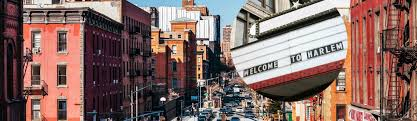
If you ever go north of 110th street, you may notice that Manhattan changes culturally. There are fewer popular stores and more family owned businesses. You’ll find streets named after famous Black and Latino Americans. This is because from 110th street to about 155th street on the west side, there is an African-American and Black cultural hub. You’ll see Black families from different parts of Africa, the Caribbean, and the US. For over 100 years, Harlem has been a mecca for Black culture in the United States. 

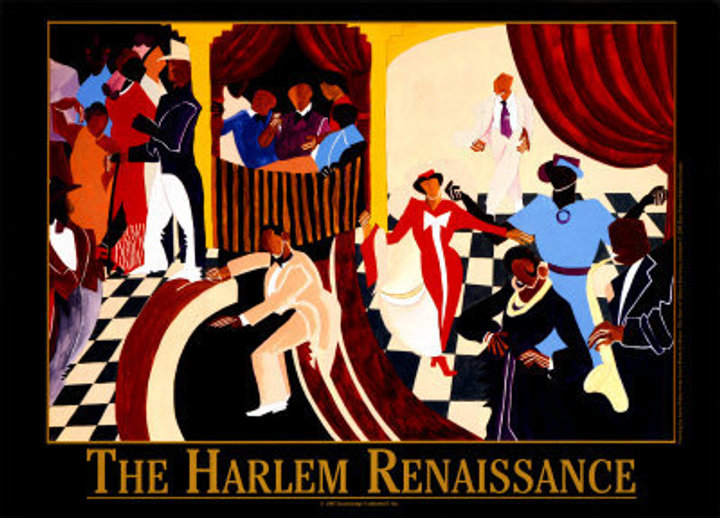
This began with the Harlem Renaissance in the early 1920’s.

The Harlem Renaissance was incredibly important in American history because of the explosion of art, music, and culture created by African-Americans. During this time period, there were not many places in the United States that African-Americans could feel safe. The Harlem Renaissance is called the rebirth of African-American culture because many African-Americans from the south moved to Harlem to express themselves.

Check out this video about the history of Harlem and the movement of African-Americans to Harlem.

The next time you find yourself uptown (above 110th street) check our traditional African-American restaurants such as Melba’s, Jacob’s, or Uptown Veg (for vegans and vegetarians).

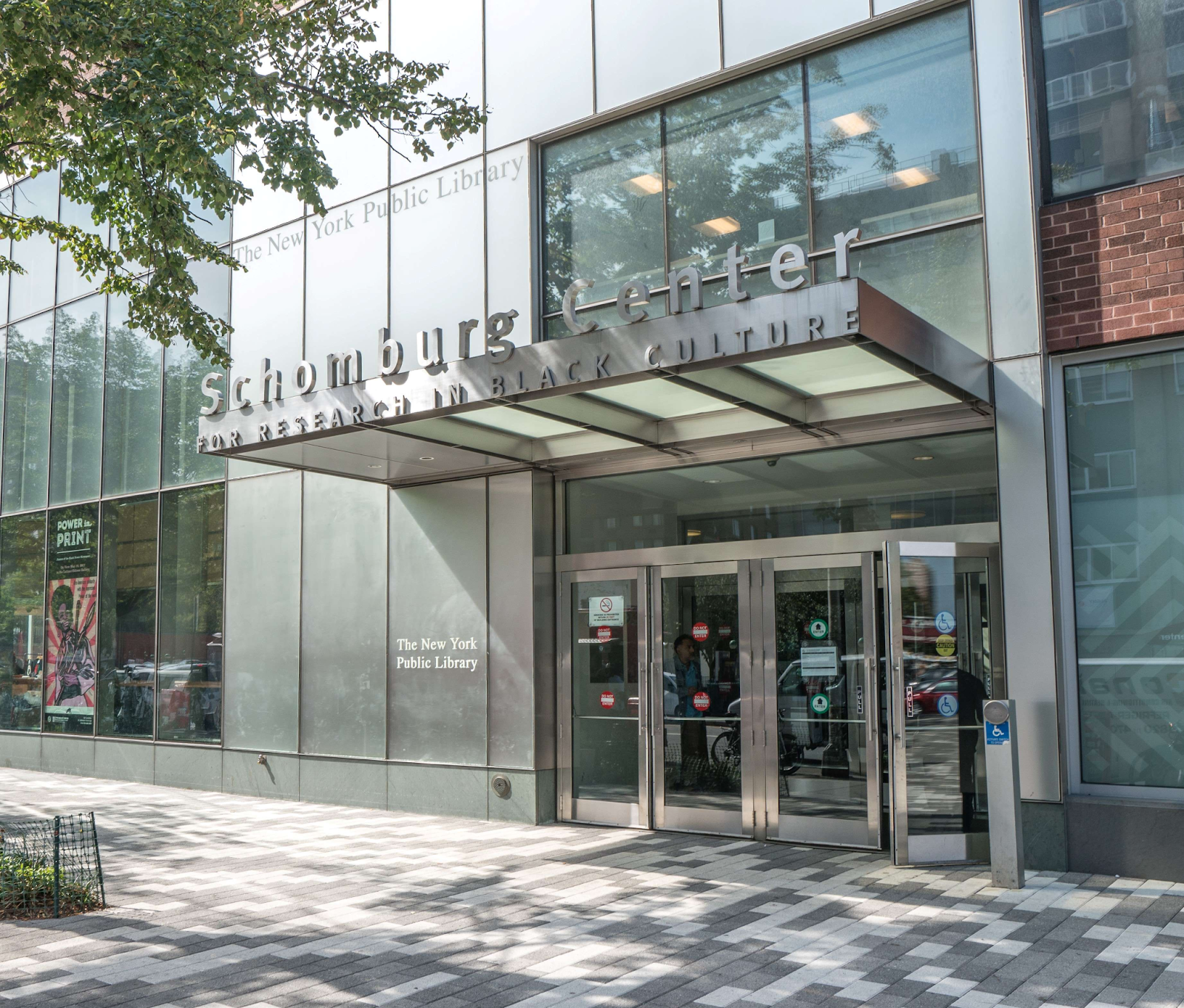
When your stomach is full of delicious food, take a trip to the Arturo Schomburg Center for Black Research and learn about African-American and Afro-Latino culture from an exhibit.

It’s free and worth the trip!

Share this:

MLK Jr. Day

What is Martin Luther King Jr. Day?

It is an American holiday to celebrate the birthday of Dr. Martin Luther King Jr.

King was born on January 15, 1929, in Atlanta, Georgia.

Who was Martin Luther King Jr.?

Dr. Martin Luther King Jr. was born in Atlanta, Georgia in the United States in 1929. At that time in America, black people didn’t have the same rights as white people. Black people had to sit in the back of buses. The schools were separated by skin color and there were even separate public restrooms for black people and white people. This was called segregation. Black people’s lives were not very good.

Martin Luther King Jr. Leads March for Civil Rights

Martin Luther King Jr. was a minister in the Baptist Church. He fought against racial segregation. He wanted equal rights for all people, but he didn’t use violence in his fight. He asked people to fight peacefully. For example, he asked black people to ride in the front of the bus. More than 200,000 people went to Washington D.C. to listen to him speak and ask the government to change unfair laws.


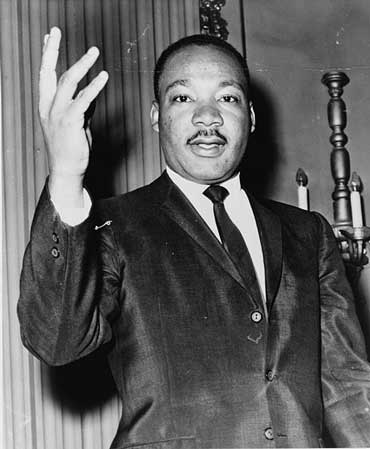
Photo of Dr. King

Because of Martin Luther King Jr., many laws began to change in the United States. But many white people disagreed with him and his ways. In 1968, Martin Luther King Jr. was assassinated(1) by a white man.

Dr. King was assassinated in 1968. Just 15 years later, in 1983, then President Ronald Reagan signed this holiday into U.S. law. People first observed(2) the holiday three years later, in 1986. At first, the holiday was not popular with all American states. Some didn’t like the name and so they called it “Civil Rights Day”. However, in the year 2000, all 50 states observed the holiday using its correct name. The musician, Stevie Wonder helped the campaign(3) for the holiday. He released(4) a famous song called “Happy Birthday” in 1980. The song made millions of Americans aware of the campaign. Six million people signed a petition(5) for the American Congress to create the holiday. It is still the largest petition in U.S. history in favor of an issue.

Check out Stevie Wonder’s Happy Birthday song here!

Many African-Americans also sing this song during birthday celebrations!

Resources:

Martin Luther King, Jr. (5minuteenglish.com)

ESL Holiday Lessons: English Lesson on Martin Luther King Jr. Day

Vocabulary:

(1)  To assassinate – verb – to kill someone important or famous

(2)  To observe – verb-  to obey a law, rule, or custom

(3) Campaignnoun- a plan with of a number of activities directed toward reaching a goal 

(4) To releaseverb– to make a product available for the public to buy, often with a celebration;

(5) Petition noun– a document signed by a large number of people demanding or asking for some action from the government

Share this: