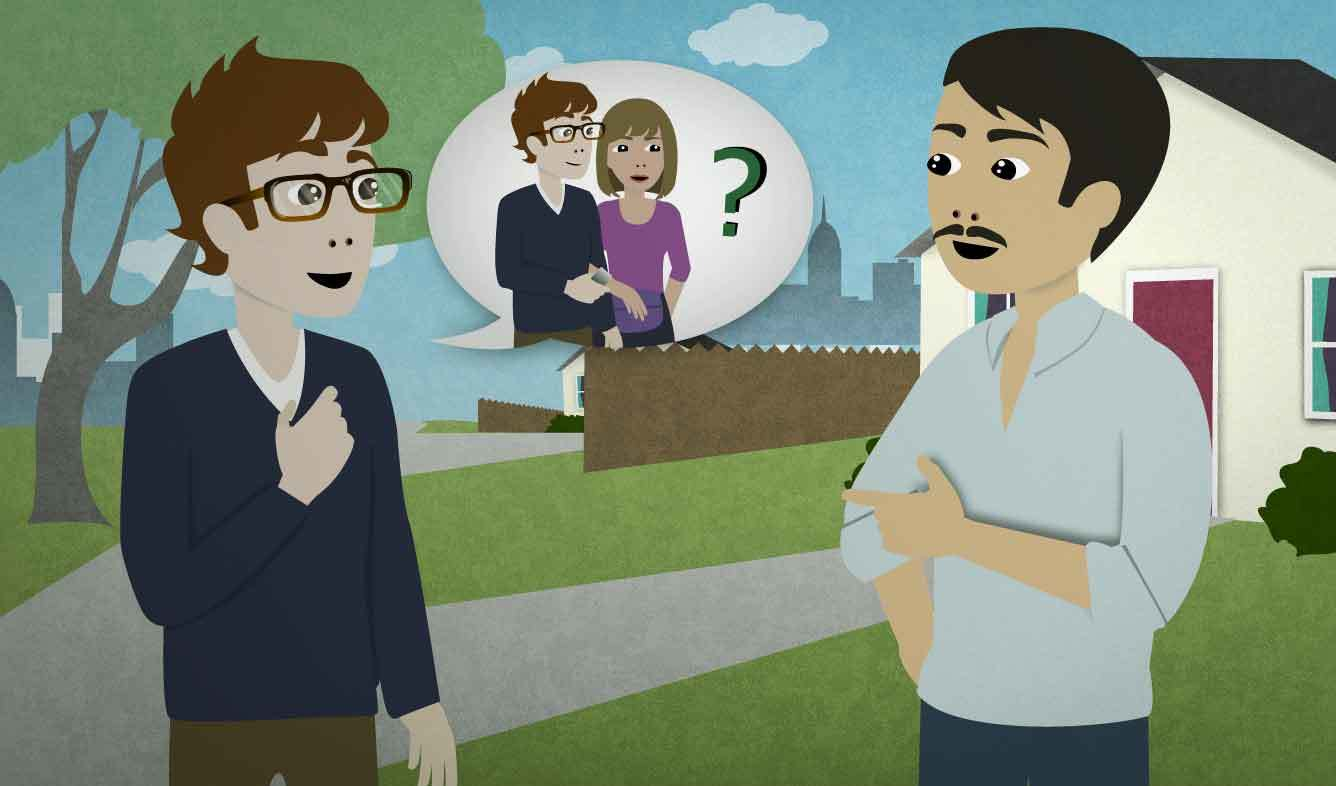
It’s a piece of cake! Understanding American food idioms.

Americans talk about food, think about food, and eat food – a lot. It’s not surprising that so many expressions in American English are centered on food. Here are a few you will hear frequently:

Let’s start with our title – “It’s a piece of cake” means that something is easy to do. You might also hear the similar, “it’s easy as pie.”


Desserts are always good – eating them is a piece of cake!

“Spill the beans.”


Shhhh – don’t tell anyone you’re learning these idioms! “Spill the beans” is another way to say you’re telling a secret or giving away a surprise.


We didn’t want Luis to spill the beans about the surprise party for Dmitri.

“Cool as a cucumber.”


This means that someone is very relaxed and confident in a situation.

Maria went into the interview as cool as a cucumber.

“Bring home the bacon.”


This means you’re going to work and earning money, or you’re competing and win a prize.


Xiting worked hard all week to bring home the bacon for her family.

“Go bananas”

We use this idiom when we want to describe someone getting very excited about something – even acting a little crazy.

The crowd went bananas when Beyonce stepped onto the stage.

And let’s finish with another ‘sweet’ expression: “the icing on the cake.”


We say, “that’s the icing on the cake” when something good becomes even better when added to.


Ekaterina was happy to ice skate at the Olympics; winning the gold medal was the icing on the cake!

If you can use all these idioms, you’ll be the Big Cheese in your English class!

(“Big Cheese” means the most important person in a group.)

Share this:

Winter Holidays Expressions!

Holidays times call for a holiday lesson on English idioms and phrases! It is likely that throughout December you will hear more idioms and phrases related to the upcoming winter holidays – Christmas, New Year’s, Chanukah, Diwali, and Kwanzaa.

Below is a list of 5 holiday expressions you might hear, with examples.

  1. Happy Holidays!

 This is a super common phrase that you’ve probably already heard!

 We usually say Happy Holidays in December because it includes everyone’s holidays in just one greeting! 

Instead of trying to figure out who does and doesn’t celebrate Christmas, Chanukah, Kwanzaa, Diwali and the New Year, you can simply say Happy Holidays to wish everyone a happy holiday!

When someone says Happy Holidays to you, you can respond with a cheery (1) “Thank you! Happy Holidays!”


  1. The more, the merrier!

This phrase is excellent if you love to host (2) parties with lots of people.

The more, the merrier is usually used in response to someone asking if they can invite an extra guest.

For example:

Christian: Alex, Thank you for inviting me to your New Year’s Eve party! Can I invite my boyfriend?

Alex: Yes of course! The more the merrier!


  1. A scrooge/a grinch

This phrase is based on 2 famous holiday stories. Both Scrooge and The Grinch are angry or grumpy (3) characters in the stories. 

If someone calls you a scrooge or a grinch, they are calling you an unkind person who hates the holidays!

For example: 

Izzy: Can we listen to Christmas music?

Tina: No, I hate Christmas music!

Izzy: Ugh! Don’t be such a grinch!

  1. Ring in the New Year!

To ring in the new year means to celebrate the end of the year and the beginning of the new year.

For example: I don’t want to go out on December 31st. I just want to ring in the new year with my friends and family this year! 

  1. Get into the holiday spirit!

Getting into the holiday spirit means that you finally feel excited about the holiday season. You feel the “spirit” or the energy of the holidays!

For example: I bought all of my Christmas gifts, and I watch a Christmas movie every night while I drink hot chocolate. I’m really getting into the holiday spirit!

Source: English Holiday Idioms, Expressions & Other Common Phrases – Ellii Blog

cheery (1) adj. happy 

to host (2) verb. to have guests over 

grumpy (3) adj.to be In a bad mood

Share this:

Idiom of the Week: “Benefit of the Doubt”

Meaning: To give someone the benefit of the doubt is to choose to not be disappointed or upset when they may have made a mistake because you have some trust in them.

Examples:

My daughter is usually so good with studying that I gave her the benefit of the doubt when I saw her watching TV all night, and I knew she had a math test the next day.

Last night the food wasn’t good at my favorite restaurant, but I will give them the benefit of the doubt and go back again because the chef probably had just one bad night.

He didn’t have any professional experience but he said he was an excellent barber, so I gave him the benefit of the doubt and let him cut my hair because my friend knew him.

Pop Quiz:

Which student should get the benefit of the doubt?

Student A and Student B have the same problem – both are often late to class. Student A has arrived several times in gym clothes and carrying a gym bag. Student B has talked with the teacher about her lateness, explaining that she has to drop off her son right before class, but she seems to be trying to avoid be being late. The teacher needs to select one student to be cancelled first.

Read More to see the answer.

Read More »
Share this:

Idiom of the Week: “A Blessing in Disguise”

Meaning: A blessing in disguise is something that seems to be bad but actually there is a positive result.

Examples:

I wasn’t accepted to my first choice school, but it was a blessing in disguise because another school accepted me and that’s where I met my wife.

Having a baby in high school was a blessing in disguise since it turned his life in a positive direction by making him realize he had to grow up himself.

Sometimes we don’t see a blessing in disguise right away – it could be years before we see the blessing.

Pop Quiz:

Which of these sounds like a blessing in disguise?

a. I had no money, then won the lottery.

b. When I tripped and fell on the street, I hurt myself but found $100.

c. I failed my test, but my mom still bought me ice cream.

Read More to see the answer.

Read More »
Share this:

Cutting Corners Revisted

We learned a new idiom “Cutting Corners” a few days ago. Do you know where the idiom comes from?

: : : Where did the phrase “Cutting Corners” come from?

: : It’s a metaphor from driving – not necessarily motor driving, because it also applies to horse-drawn carriages. When you come to a sharp turn in the road, instead of going all the way to the corner and then turning, you can go diagonally across, and “cut the corner off”. This saves time, but entails a risk of clipping the curb and overturning, or being involved in a pile-up with another vehicle. Thus “to cut corners” means to discard normal safe practice in order to get fast results.

from The Phrase Finder

Let’s watch the video clip to review the meaning and the origin, and look at more example sentences.

Share this: