Computers 4 People donates computers and helps collect old tech to refurbish. Computers 4 People has grown to a leading organization tackling the digital divide in the New York City Metropolitan area. They partner with 100+ non-profits across NJ & NYC that nominate low-income individuals in need to apply for a computer. Learn more here.
Just 2 days ago we celebrated the day of love! And whether you spent it with your family, your partner, or yourself, people will ask, “What did you do on Valentine’s Day?” or maybe “What did you do for Valentine’s Day?”
There is only a small difference between these 2 phrases (on vs. for), but the meaning is almost the same in this case.
Because this is NYC, no one will ask you slowly and clearly, instead it will probably sound like,
“Whatdya do fer Valentine’s Day?”
This is called assimilation ( uh- SIM-uh-lay-shuhn). Assimilation is when two sounds come together and merge into a new sound. It usually happens when people talk fast!
For example: “What did you do?” when spoken by a fast-talking New Yorker becomes “Whatdya do”, mixing or assimilating the letters “t”, “d”, and “y”.
You may also hear people say “Whatcha” as is “What did you”.
There are many other assimilated sounds in English as there are in any language!
Below are some examples in English:
His daughter = “hiz daughter”
Winter Break = “Winner break”
Atlanta = “Atlana”
White paper = “Why paper”
Are there any words or sounds that are assimilated in your language?
And, of course, I must ask, “ Whadya do for Valentine’s day?”
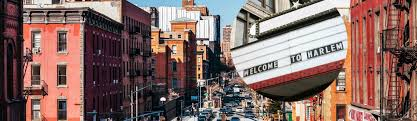
If you ever go north of 110th street, you may notice that Manhattan changes culturally. There are fewer popular stores and more family owned businesses. You’ll find streets named after famous Black and Latino Americans. This is because from 110th street to about 155th street on the west side, there is an African-American and Black cultural hub. You’ll see Black families from different parts of Africa, the Caribbean, and the US. For over 100 years, Harlem has been a mecca for Black culture in the United States.
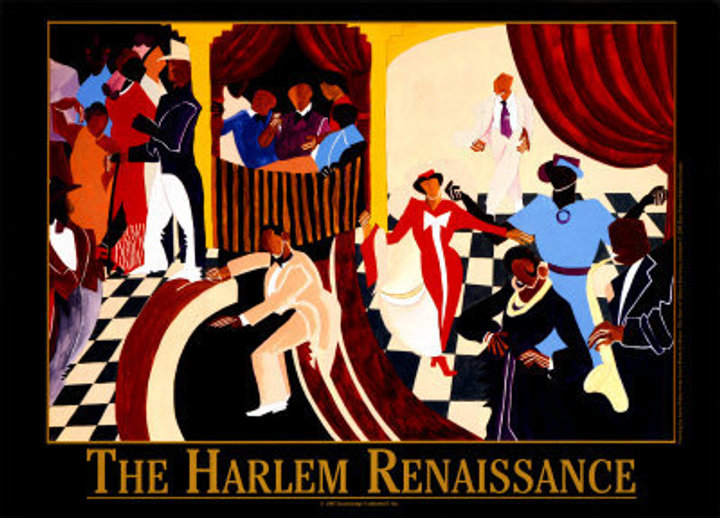
This began with the Harlem Renaissance in the early 1920’s.
The Harlem Renaissance was incredibly important in American history because of the explosion of art, music, and culture created by African-Americans. During this time period, there were not many places in the United States that African-Americans could feel safe. The Harlem Renaissance is called the rebirth of African-American culture because many African-Americans from the south moved to Harlem to express themselves.
Check out this video about the history of Harlem and the movement of African-Americans to Harlem.
The next time you find yourself uptown (above 110th street) check our traditional African-American restaurants such as Melba’s, Jacob’s, or Uptown Veg (for vegans and vegetarians).
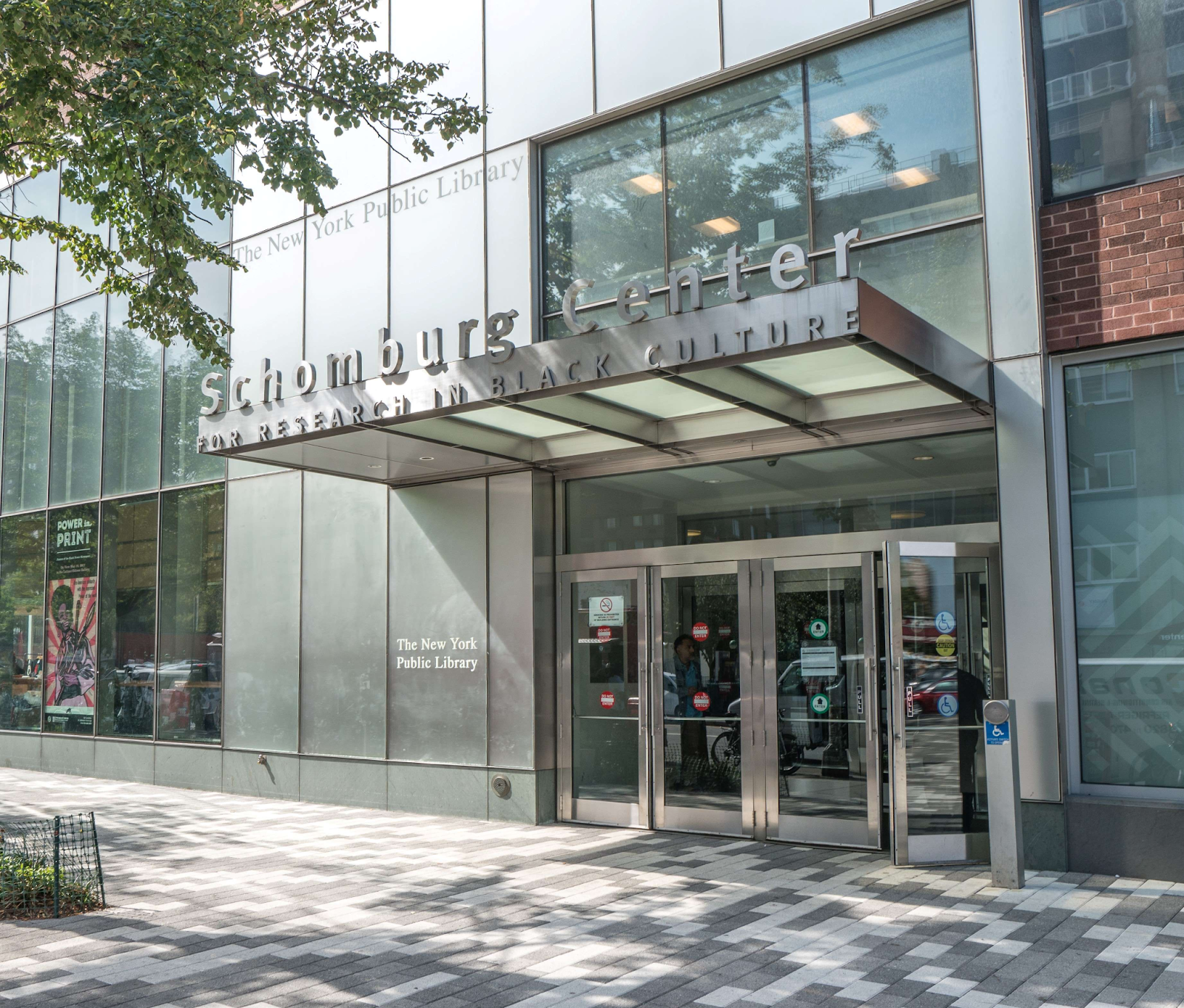
When your stomach is full of delicious food, take a trip to the Arturo Schomburg Center for Black Research and learn about African-American and Afro-Latino culture from an exhibit.
Starting on Monday, March 13th, First Step will be offering a free, in-person job training class that focuses on helping women prepare for careers in non-profit/human services settings. The training will runevery weekday from 9:30 am – 3:30 pm for six weeks from March 13th– April 21st.
‘Loisaida’ is the NYC neighborhood at the root of powerful movements.
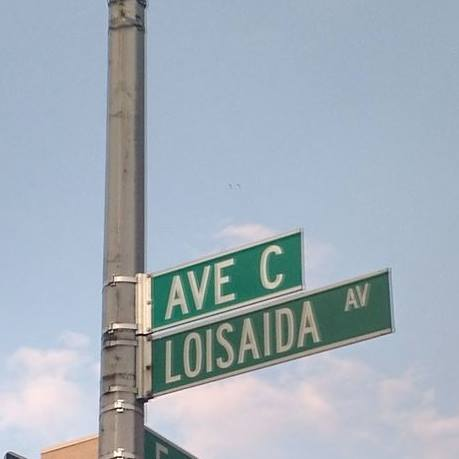
While walking through the Lower East Side, did you ever notice the other name for Avenue C?
If you’re Puerto Rican or have lived in NYC for long enough to see the neighborhood change, you may have a soft spot for the word, “ Loisaida”.
Say it slowly. What downtown New York City neighborhood does it sound like?
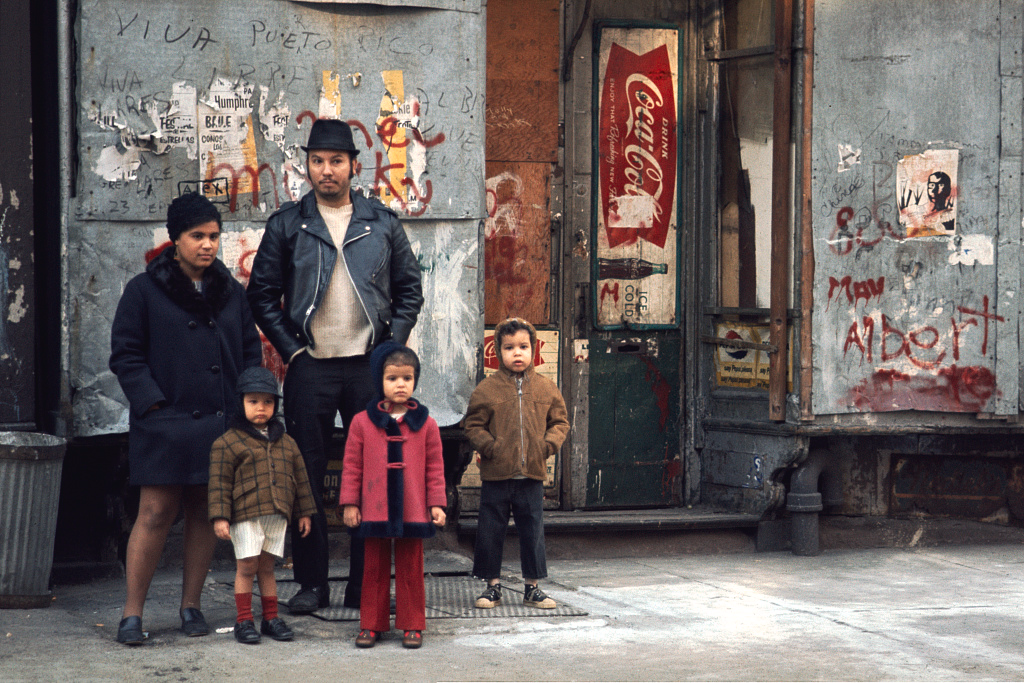
Before The Lower East Side (LES) was a shopping and restaurant area mostly for university students, the Manhattan neighborhood was a working-class neighborhood for immigrants from across the world. In the mid-1900s, the Latinos who lived there called it “Loisaida”. Puerto Ricans and other working-class people made Loisaida a place for activism in New York City from the 1940s to the 1990s.
Activist groups tried to improve the lives of residents in the neighborhood by leading protests and mass building squats. Locals also created spaces for the community, like gardens and restaurants. These actions along with art that brought Latinos together helped form national cultural pride. This created the The “Nuyorican” identity (preferred by some Puerto Ricans from New York),
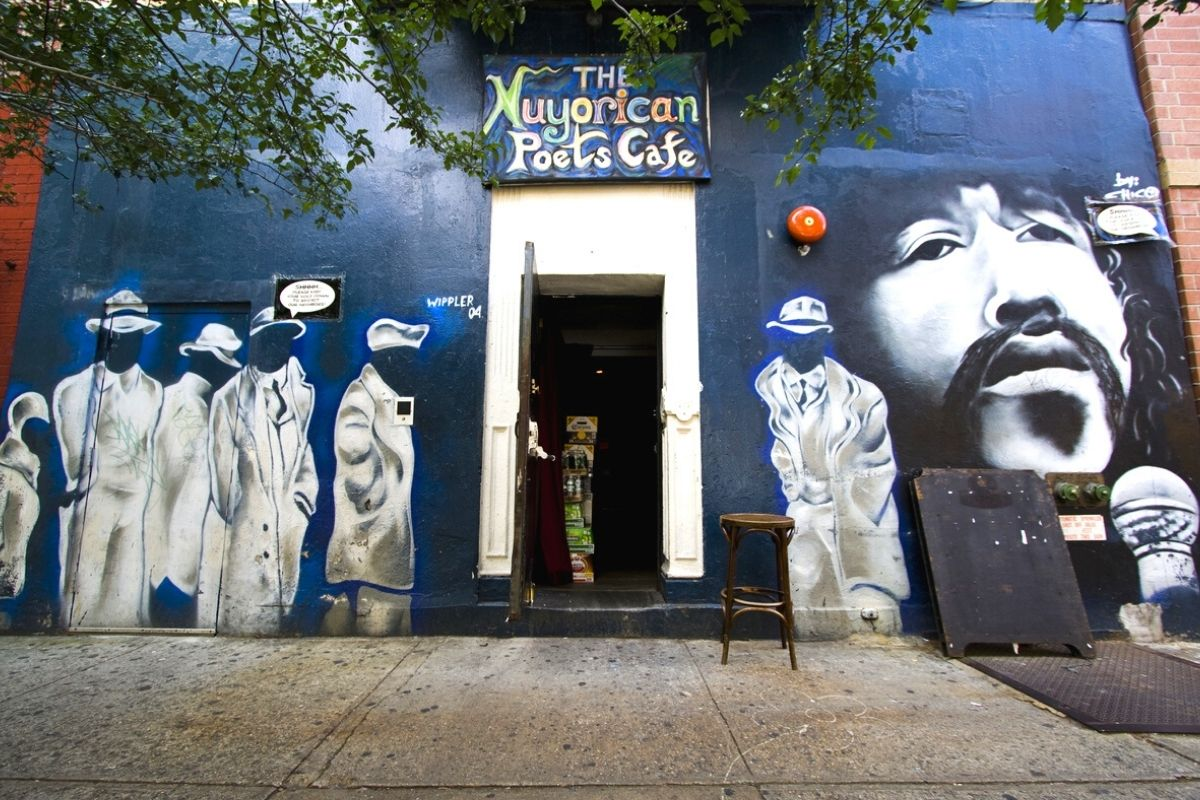
Have you heard of the Nuyorican Poets Café, opened in 1973? Many Latino artists, like poet, Aja Monet and actress, Rosario Dawson performed here!
Today LES has the second-highest income inequality gap in Manhattan. As the neighborhood becomes unaffordable, Latino families who once lived well there are being pushed out.
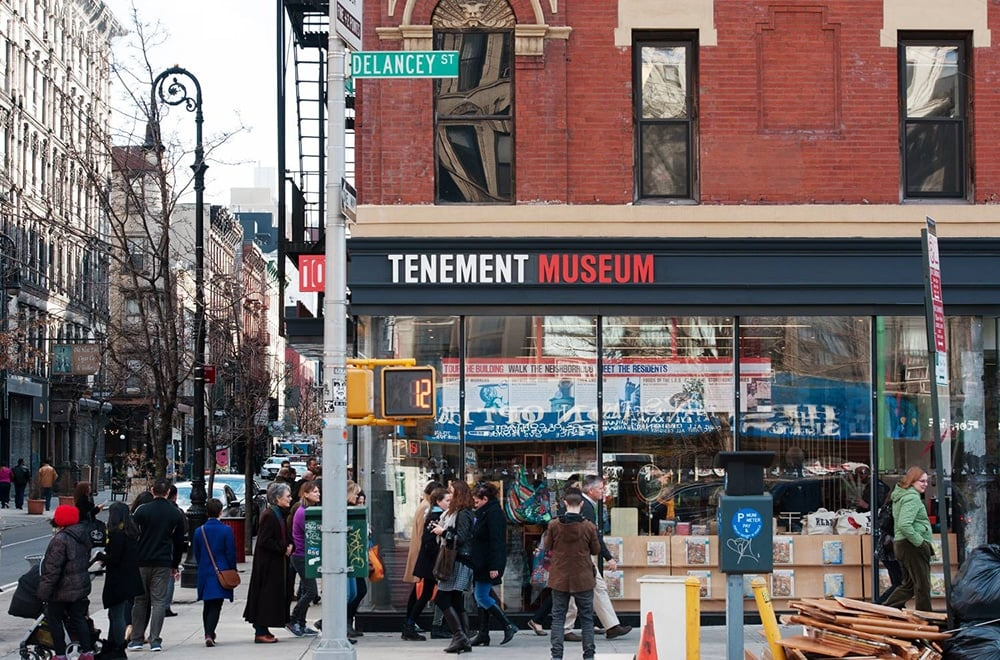
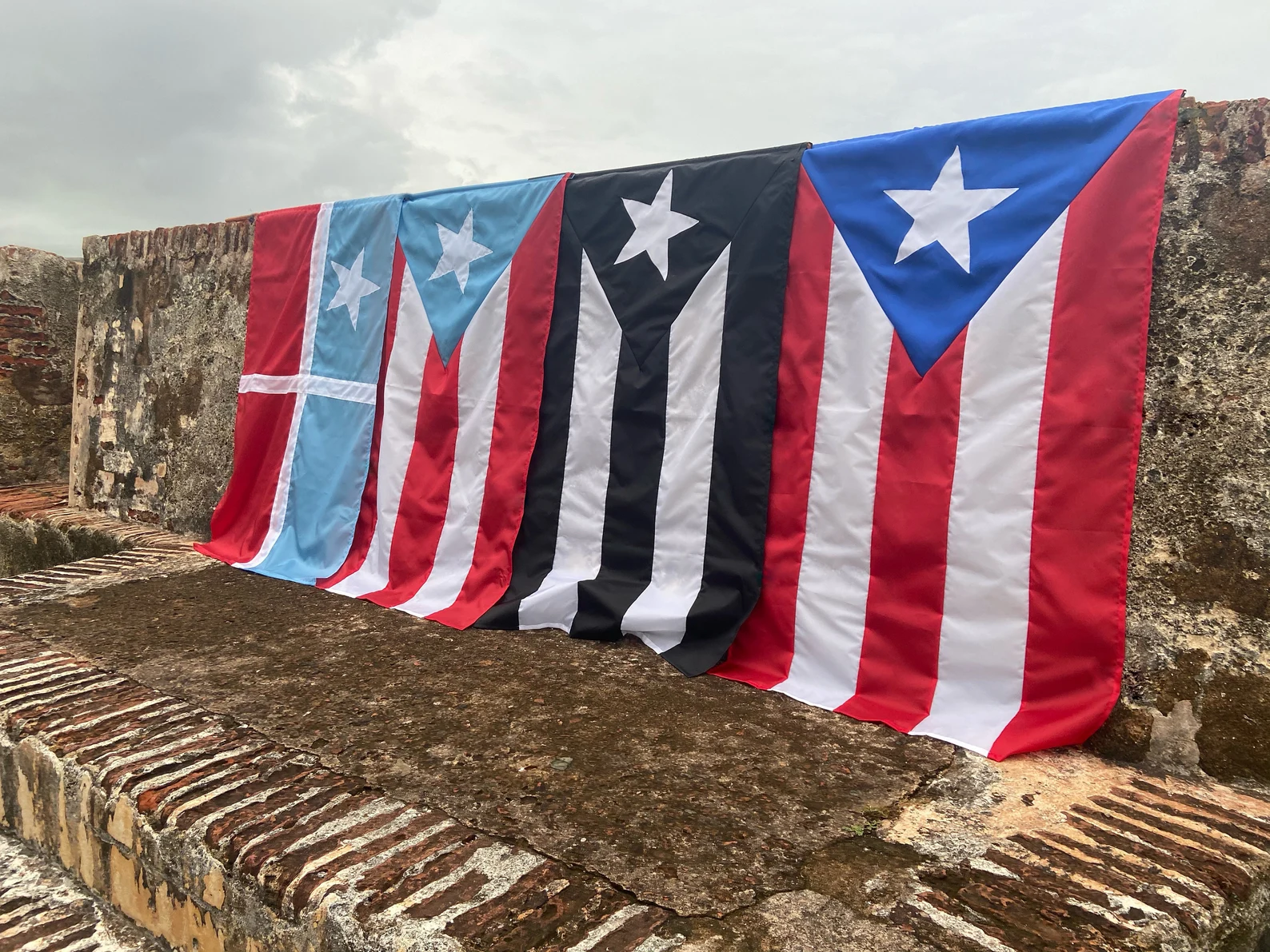
Thankfully, some cultural hubs, like Loisaida Center and Tenement Museum, still exist and remind us of the Latino influence that helped strengthen Latino movements for justice, such as the creation of the modern Puerto Rican Flag!
Check out next week’s blog to learn more about the influence of the Lower East Side on the history of Puerto Rico!
Soft spot-noun- to like something or someone a lot. Income inequality gap- noun– income = money, inequality= unequal, gap= space Unaffordable- adjective– expensive, not easy to buy Hub-noun – a place that is a center of a particular activity Activism – Noun– social or political change To squat – Verb – living in a building without the legal right to do so